
Essentials Gears for Hiking
Hiking Essentials Checklist
Going for a day out with friends and family or even exploring nature is a fun way. Whether you want to go deep into the mountains or stay close to home, there are countless places to go. Many state and national parks offer extensive network trails, as does national forest land.
To determine what you need to hike in a day, think about how far you plan to hike, how far the location is, and near the weather forecast. What is it? In general, the longer and/or longer the trek and the worse the weather, the more clothing, supplies, food, and water you will need. If you are only going for a day hike, be sure to read our Hiking for Beginners article before going out.
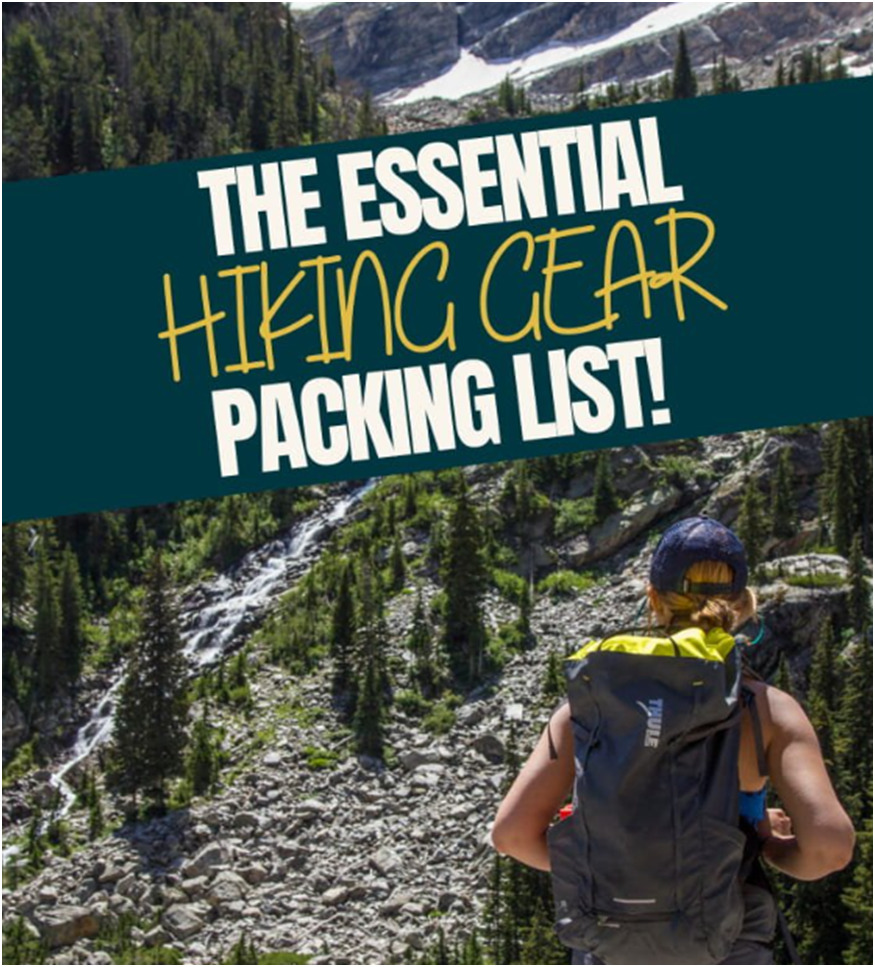
How to know what to bring on foot?
It can be stressful for beginners to know what to add to a day’s supply. For hiking, you may want to carry essential safety equipment, but also some comfortable items.
To increase the day, your goal should be:
- Bring all the necessary hiking safety equipment, such as a first aid kit and 10 essentials
- Pack some amenities like a camera, comfortable clothes, and sunglasses.
- Keep your hiking day pack light – you don’t want to carry too much unnecessary weight
- This guide will tell you about each of these goals and I have provided links to my favorite hiking gear.
Best Hiking tools you should get:

? Day hiking bag
It’s a must-have, for any Affiliate, promoting any program. Look around the market and see what works best for you.
For daytime hiking, I usually like to carry a bag of about 20-30 liters, with space for a camel-back type bladder of water, and hip straps and chest straps.
? Hiking map
I always like to have some kind of map with me, whether I print it online or buy it for my specific trail.
Many trails have thorns and divide in different directions, so it is good to have something to ground yourself.
I once had to use my map to help get out of the pickle while hiking on Mount Langley (California’s 14,000-foot peak). My maps helped me find an integrated trail so I could save a lot of time (and miles) to get to the snow-covered pass.
? Hiking GPS device
I’m a data idiot, and so should you! I know a lot of people don’t use GPS when hiking, but I consider it an integral part of the gear, and there are many great options.
My favorite GPS is the Garmin GPS 64st. It definitely worked to help me navigate when I wasn’t sure where I was. The first solo hike I did helped me get to the main trail through a large toll field as I got out of the way.
I even created my GPX file on Google Earth and downloaded it to this GPS so that my friend and I could walk on the less-traveled route called Bastards Ridge.
? Yeti Daytrip Lunch Bag
Lunch may be one of the best parts of hiking but there is nothing that can ruin a moment faster than a squashed sandwich. This insulated Yeti Daytrip Lunch Bag is water-resistant, leakproof, and packable. An adjustable closing mechanism allows you to save valuable pack space. This lunch bag is the perfect size to fit in a day pack, but it is the type of hiking gear you will use when packing lunch for the office.
? Leatherman Squirt PS4 Multi-Tool
Well, let’s face it – most multi-tools work more for hiking. When you are in the backcountry, you often do not need three types of screwdrivers and two pairs of pliers. But the Leatherman Squirt PS4 lightweight package provides enough bang for your buck. You will definitely want to keep a knife, nail file, and mini-scissors for use on the trail, and it is also very useful for projects around the house.
? Gnarly nutrition electrolyte mix
Although not technically protective equipment, nurturing is always safe. If you travel long distances or in hot temperatures, hydration powders replenish essential electrolytes such as sodium, potassium, and calcium that you lose when you sweat. Gnarly’s Hydrate comes in delicious flavors like ruby red grapefruit and orange pineapple, so you don’t have to struggle to stay hydrated on your hike. It is made with clean ingredients and has a low sugar content, making it easier on the stomach when your heart rate increases.
? Rapid Pure Scout Online Purifier
It is very important to stay hydrated while hiking. “For hiking, and if I know a reliable source of water is in my way, I prefer to filter the water, so I don’t have to carry all the water from the beginning. Says Trimble. He uses this RapidPure water filter because it is lightweight, has a good flow rate for its size, and works even after freezing (mostly not). “I usually keep it in my pack with an extra hydration reservoir because I’m glad to know I can always fill it up.”
? Garmin Apex
Another option for a dedicated GPS mapping smartwatch. They’re not cheap, but they do include topographic maps, an accurate GPS, an ultimatum and a compass. This watch is also a fitness tracker, sleep tracker, can load other apps etc. It’s similar to the Apple Watch but is designed for outdoor enthusiasts and players (and has buttons instead of a touch screen – much better for the outdoors). The new Garmin Fenix 7 came out, but I prefer the better screen over the new Epix (Gen2), and the multi-band GPS can’t be beaten. If you want something like this without maps, try Garman Instant.
? Black Diamond Trail Ergo Cork Trekking Pools
I’ve been back and forth on tracking polls, but I think for most people this is a good investment. They help you dig uphill, provide loose bottom stability, act as a brace when crossing rivers, and can eliminate potentially aggressive wildlife in a snap. Trail ergo cork poles have a good balance of lightweight, durability, affordability, and ease of use. If you want something even lighter and more expensive, I’m lucky with Black Diamond Z Pools too.
What should I pack for an extra day?
You should pack a hiking bag, 10 hiking accessories, extra layers of clothing, durable hiking boots, and a few non-essential items such as a troll, portable charger, and smartphone.
What should you not take on a hike?
You should not buy valuables, such as jewelry or nice clothes. Don’t bring more than one pair of shoes and unnecessary jackets. Do not wear fabrics made of cotton or denim as this material becomes heavy and does not dry quickly.
What do beginners need?
Beginners should always carry 10 essentials and a hiking backpack. The top 10 essentials include potentially life-saving gear such as navigation, headlamps, a first aid kit, and extra water. Be sure to pack extra layers and snacks too!
What are the 10 essentials for survival?
The 10 essentials for hiking survival are navigation, light, sun protection, first aid kit, repair kit, multi-tool, fire starter, emergency shelter, extra food, extra water, and extra layers of clothing.
What should I wear for a day trip?
You should wear lightweight, breathable, quick-drying clothes for a day trip. Look for materials like base layers, wool or down jackets, and hiking pants like merino wool. On cold days, don’t forget to wear gloves and a hat.