
Hiking Tents 2022
BEST backpacking TENTS for camping
If you’re looking for one of the best backpacking tents on the market, you’ve come to the right place. Since 2012 our team of wilderness experts has tested over 65 tents on trails all over the world.
Testing backpacking gear is our full-time job and we take these guides very seriously, constantly watching the market for new innovations and updating this list regularly. Our tent recommendations are fully independent and our number one goal is to help our readers find products they’ll love for many years of backcountry use.

Hiking and backpacking shelters come in all shapes, sizes, and prices. Big, heavy tent options offer plenty of room for people and gear but weigh you down while trekking to the next camp. Ultralight models save your legs from burning on the trail but rarely provide proper living space or weather protection. Buying the right tent requires shopping for a wide range of solutions. If you’re looking for a camping tent that falls somewhere in the middle, you’re going to want a backpacking tent. Thankfully, we’ve done the hard work for you to round up the best backpacking tents, from budget to ultralight and everything in-between.
Mountain Hardwear Nimbus UL 2 Backpacking Tent

True to its name, Mountain Hardwear delivers some of the world’s most “hard-wearing” camping gear. The Nimbus UL2 Tent is one of the lightest two-person backpacking tents on the market, with a minimum trail weight of just two pounds. Despite that featherweight design, it offers more than 28 square feet of floor space with almost eight square feet of vestibule storage. Plus, it promises solid weather protection with a 20D nylon rainfly impregnated with silicone on both sides to increase waterproofing and durability.
Big Agnes Copper Spur HV UL2 Tent
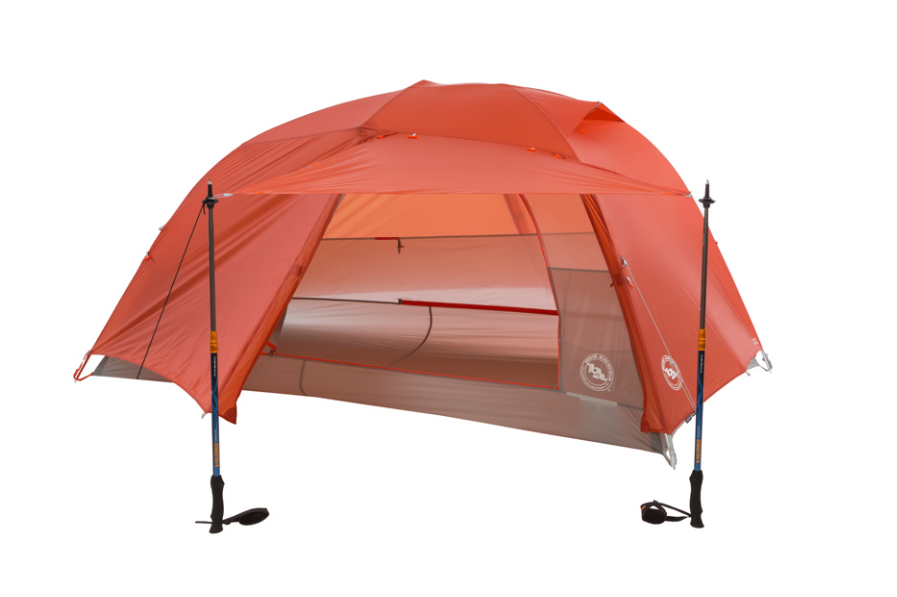
We’re fast becoming fans of Big Agnes. The brand’s Copper Spur HV UL2 is a solid backpacking tent that just received a significant upgrade. The latest incarnation is better in every way, with lighter, more durable materials and improved pitchability that make it easier to set up than ever before. At under three pounds, it’s a great solution for backpacking duos who appreciate saving a few ounces on the trail.
Kelty Late Start 1 Backpacking Tent

If you value convenience above all else, few solo tents are as quick and easy to pitch as Kelty’s Late Start 1. So named for “late starters” who often find themselves setting up camp after a long day at work or on the trail, everything about the Late Start is designed to be dead simple, thanks mainly to the brand’s Quick-Corner Technology. At the north of three pounds, it’s a bit heavy for a solo backpacking tent.
MSR Hubba Hubba NX Tent

MSR’s two-person Hubba Hubba has been a favorite tent among backpackers and ultralight hikers for ages. Pared-down, it boasts a minimum “fast-pitch” trail weight of just three pounds or 3.8 pounds for more typical users. Even with such a trim design, it boasts almost 30 square feet of living space and a 39-inch interior height. StayDry doors and a canopy-compatible rainfly combine for excellent wet weather when camping in the rain.
Marmot Limelight 2P Backpacking Tent

Marmot’s Limelight 2P strikes a balance between weight, living space, and weather protection. With a minimum trail weight of just over five pounds, it’s well-sized for even weight-conscious backpackers. But, the three-season design offers excellent wet weather protection, and the 33-square-foot-floor plan and 9.5-square-foot vestibule provide plenty of space for two.
MSR Hubba Hubba 2P

One of the most well-rounded backpacking tents on the market for years running, MSR’s Hubba Hubba offers exceptional livability and weather protection in a durable, lightweight package. Revamped for 2022, the newest version shaves a considerable amount of weight (10 oz.) off of the outgoing model with the use of thinner materials, but the overall design remains the same. A non-tapered floor plan, 40-inch peak height, and near-vertical walls offer excellent interior space, and you get great weather resistance with a long-lasting waterproof coating on the fly and a hubbed pole design for stability in high winds. Checking in at just 3 pounds 4 ounces, all signs point to this being the best Hubba Hubba yet.
How does the Hubba Hubba measure up to our top-ranked Copper Spur?
With the Big Agnes, you get 4 inches more length and a few inches more width at the head, and the steep walls and non-symmetrical pole structure create an impressive amount of headroom at one end. On the other hand, the MSR’s non-tapered build offers more width throughout, which means you’ll have the option of sleeping head-to-toe with your tentmate. Another factor to consider is the Hubba Hubba’s solid tent walls (the Copper Spur is more mesh-heavy), which will be better in high winds but result in less ventilation overall. Finally, both tents are relatively similar in terms of durability: The MSR’s floor is 20 denier vs. the Big Agnes’ 15×20 denier.
Tarptent Double Rainbow
California-based cottage brand Tarptent isn’t a household name yet, but the company offers an inspiring ultralight lineup at reasonable price points. The Double Rainbow is our favorite model, featuring a unique single-wall design that keeps weight in check while still maintaining impressive livability. For just 2 pounds 10 ounces, you get a 30-denier floor (15D is standard in UL tents), a generous and symmetrical floor plan that easily fits two sleepers (30.6 sq. in. compared to the Tiger Wall’s 28 sq. in.), and two doors and vestibules. Priced at just $319, it’s no wonder that the Double Rainbow is one of the most popular cottage designs among ultralight and thru-hikers this year.
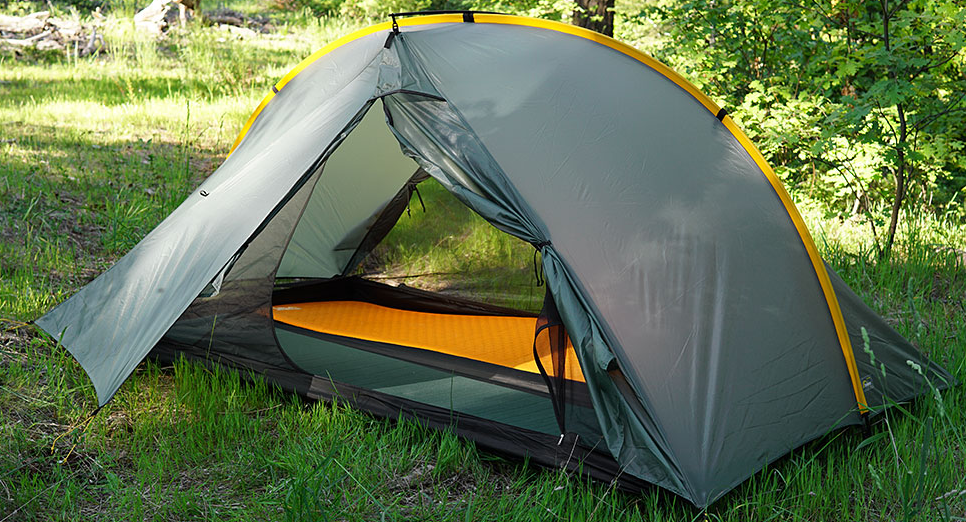
The Tarptent’s hybrid single-wall construction means setup is a breeze: you simply thread the main pole through a sleeve in the rainfly and stake everything out (the “tent body” is made of mesh and hangs from the bottom of the rainfly). This is particularly nice in wet conditions, as there’s no moment during the setup process when the inside of the tent is exposed to rain. It’s important to keep in mind that the Double Rainbow is a non-freestanding design, which means you’ll need soft ground or good anchors to get a good pitch (alternatively, you can convert it to freestanding with trekking poles). Finally, it does not come seam-sealed, but it’s a fairly simple DIY process or you can add it to your order for $35. And a final note: Tarptent also makes the Double Rainbow Li ($699), a Dyneema version of the tent here that competes with the Zpacks Duplex above